





Lube Isn’t Optional. It’s the Difference.
Most men who’ve had a bad experience during anal play share one thing in common.
They skipped the lube. Or used the wrong kind. Or didn’t use enough.
And then they blamed themselves.
That’s the part we want to fix.
Lube Is Not a Comfort Item. It’s a Functional Requirement.
The rectum does not self-lubricate. That’s not a design flaw — it’s just anatomy.
When you go in without adequate lubrication, you create friction where there shouldn’t be any. Friction causes micro-tears. Micro-tears cause pain, bleeding, and dramatically increased STI transmission risk.
This isn’t about being too sensitive. It’s about basic mechanics.
What Happens When You Don’t Use Enough
- Pain — not the "I’m not ready" kind. The "something is wrong" kind.
- Tearing — small abrasions in the rectal lining that heal, but leave you vulnerable in the meantime.
- Inflammation — which makes the next time harder, not easier.
- Negative conditioning — your body remembers. If it hurt, it’ll brace next time before you’ve even started.
The irony: men push through without lube thinking they’re being tough. They’re actually making every session after that harder.
The Three Types of Lube and When to Use Each
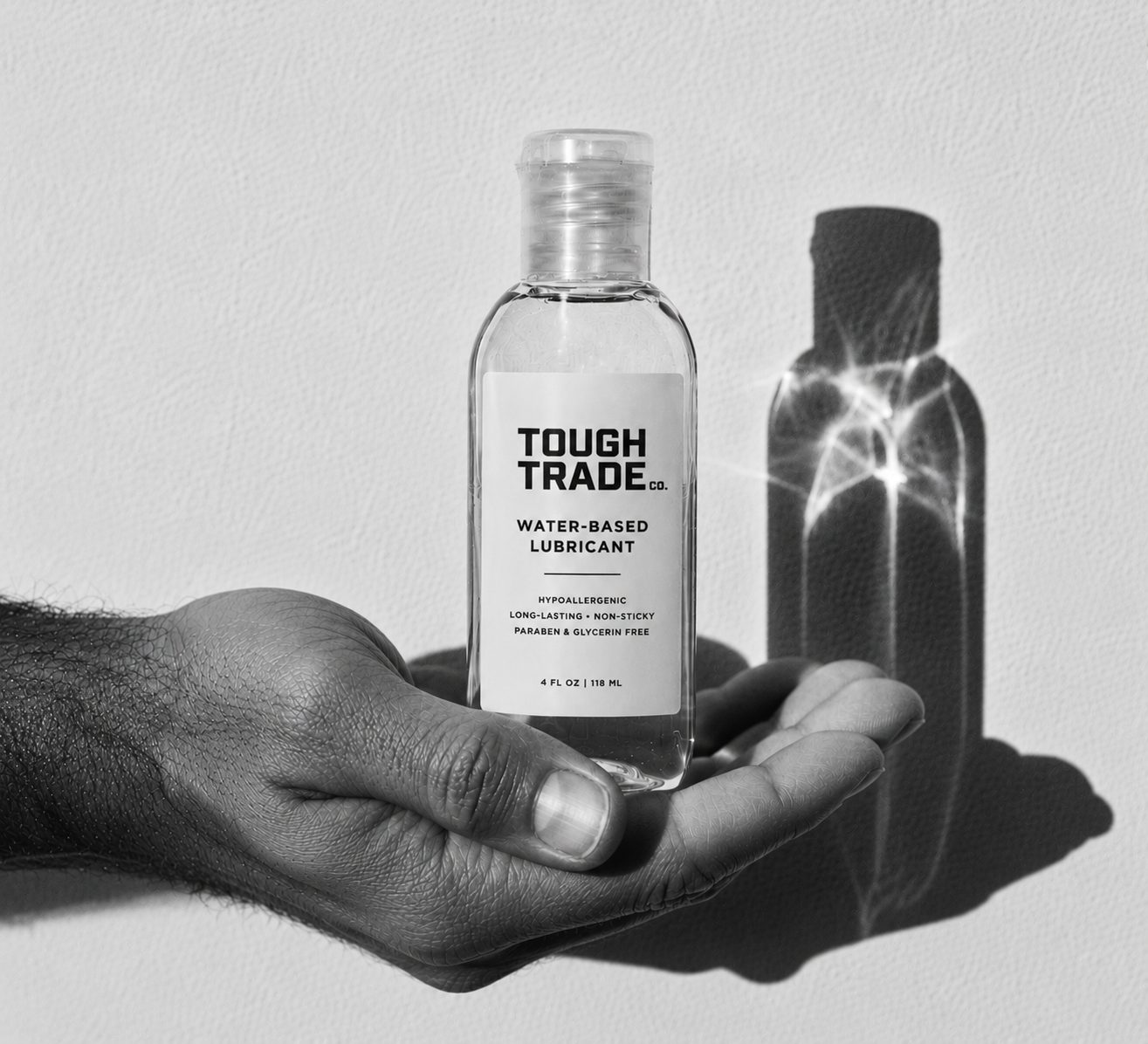
Water-Based
Best for: everyday use, toy play, condoms
- Safe with all condom materials
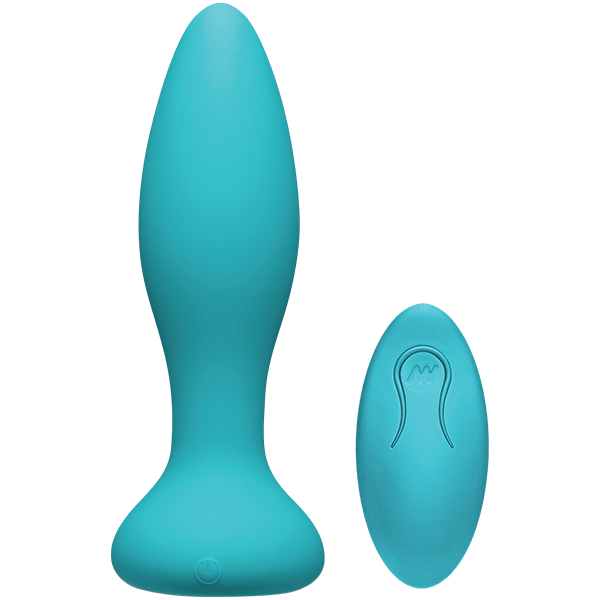
- Safe with all toy materials (silicone, latex, rubber)
- Absorbs into skin over time — you’ll need to reapply
- Easiest to clean up
If you don’t know what to buy, start here.
Silicone-Based
Best for: longer sessions, partner play, shower/water play
- Lasts significantly longer than water-based
- Does not absorb — stays slick
- Not safe with silicone toys — it degrades the material
- Safe with latex condoms
- Harder to wash off
If you’re going longer or wetter, this is your move.
Hybrid (Water + Silicone)
Best for: men who want the staying power of silicone with easier cleanup
- Longer-lasting than pure water-based
- Generally safe with most toys (check the formula)
- Good middle ground
How Much Is Enough
More than you think.
First-timers especially tend to underestimate. The rule: use what feels like too much. You can always add more — you can’t undo friction that’s already happened.
Reapply during the session if things start feeling different. Dryness creeps up.
What to Avoid
- Silicone lube on silicone toys — ruins the surface, harbors bacteria
- Oil-based products with latex condoms — breaks down the latex
- "Warming" lubes with numbing agents — numbing removes your body’s warning signals. Pain exists for a reason. Don’t silence it.
- Saliva — dries out immediately and introduces bacteria
The Right Lube for You
| Situation | Best Lube |
|---|---|
| First time, using toys | Water-based |
| Longer partner session | Silicone-based |
| Using a silicone toy | Water-based only |
| Shower or tub play | Silicone-based |
| Not sure | Water-based |
Bottom Line
Lube isn’t a luxury. It’s not a sign that you need extra help. It’s the difference between a session that works and one that sets you back.
Buy the right kind. Use enough of it. Reapply.
Everything else gets easier from there.
TOUGH TRADE CO.
The more you understand what you’re doing, the better it gets.
We send real guidance — no fluff, no performance. Just better understanding of your body, your gear, and what actually works.